

Artificial Intelligence and the Future of Head and Neck Cancer Care
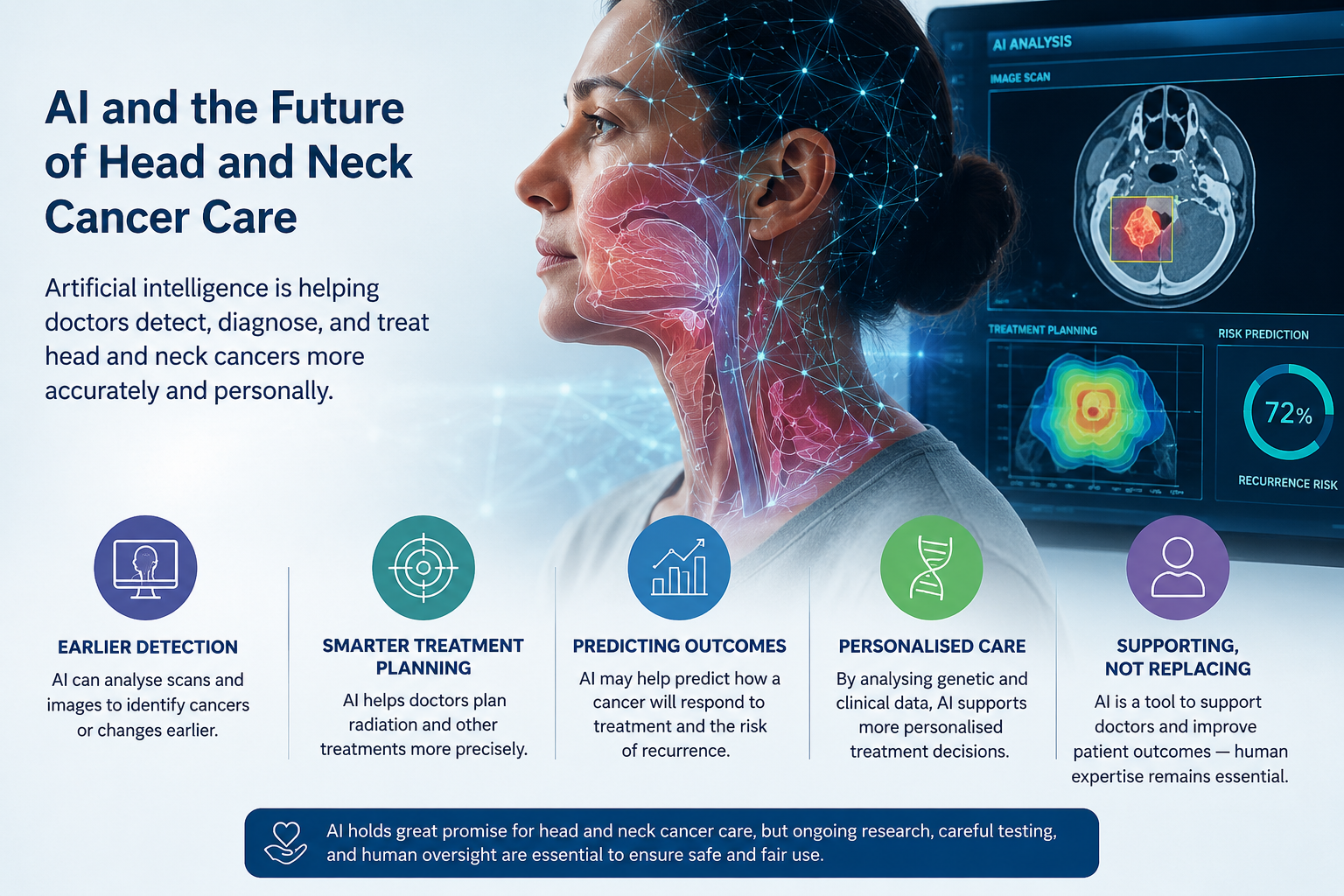
A recent review article published in Cureus explores how artificial intelligence (AI) is beginning to influence the diagnosis, treatment, and management of head and neck cancers.
The article explains that AI refers to computer systems that can analyse large amounts of medical data and identify patterns that may help doctors make decisions more quickly and accurately. Researchers reviewed a wide range of studies examining how AI tools are being used across head and neck cancer care.
One major area of interest is early diagnosis. AI systems are being developed to analyse medical images such as CT scans, MRI scans, pathology slides, and photographs of oral lesions to help detect cancers earlier or identify suspicious changes that may need further investigation.
The review also highlights how AI may assist with treatment planning. In radiation therapy, AI can help map tumours more precisely and reduce the time needed for planning treatment. Researchers are also studying whether AI can help predict how cancers may respond to treatment or estimate the risk of recurrence.
Another area discussed is personalised medicine. By analysing genetic information, tumour characteristics, and patient data, AI may help doctors tailor treatments more closely to each person in the future.
The authors note that while the results are promising, many AI systems are still in the research stage and require further testing before becoming part of routine clinical care. They also highlight important concerns around privacy, data quality, fairness, and the need for human oversight when using AI in healthcare.
Overall, the article suggests that artificial intelligence has the potential to become an important support tool in head and neck cancer care, helping clinicians improve diagnosis, treatment planning, and patient outcomes while working alongside experienced healthcare professionals.