Head & Neck Cancer Support Network Trust Community News August 2026
You’re Not Alone: Come and Meet Others Who Understand
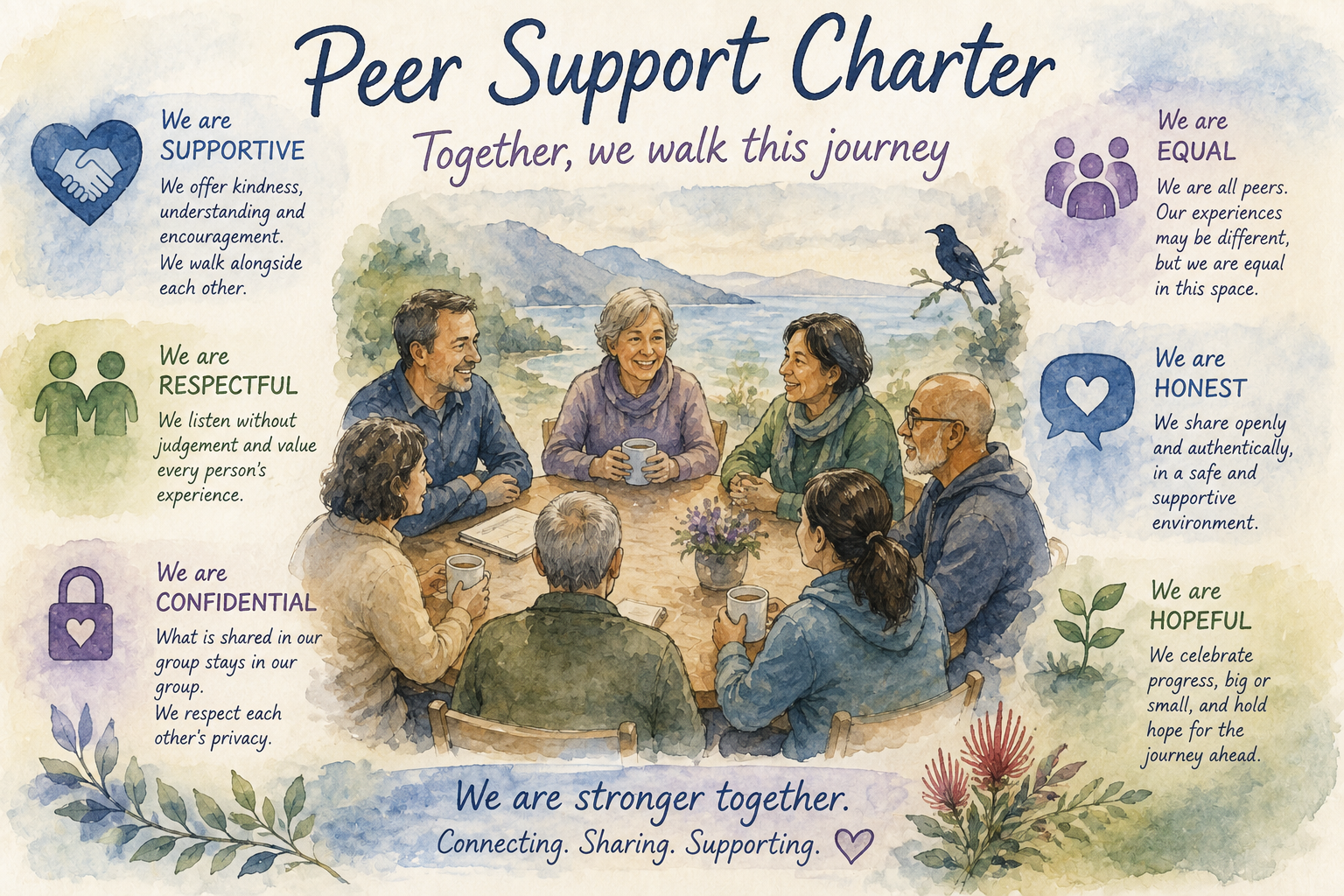
There is something special about meeting someone who doesn’t need you to explain.
They understand what it is like to hear the words “You have head and neck cancer.” They understand the uncertainty, the treatment, the side effects, the changes to eating, drinking, speaking or appearance — and the things that can continue long after treatment has finished.
For many people living with head and neck cancer, it can be an isolating experience. Our cancers are often less visible than other cancers, and it can sometimes feel as though there is nobody else who really understands what we are going through.
We want to change that.
Come and meet the people who get it
We have been listening to our members, (patients and whānau), and one thing is becoming increasingly clear: people want to connect with others who have been through something similar.
Previously, getting people together online could be difficult. But things have changed. Since COVID, many of us have become much more comfortable with Zoom and other online meetings. We know how to join a meeting, have a cuppa, turn the camera on — or leave it off — and have a good old-fashioned chat from the comfort of home!
So we are going to make the most of that.
Our online support groups will meet once a month in the evening.
These won't be formal meetings or lectures. They are simply an opportunity to meet, talk, listen and connect with other people affected by head and neck cancer.
You might want to talk about your own experience.
You might have questions you haven't found anyone else to answer.
You might be having a difficult day and simply want to hear another friendly voice.
Or you might be doing really well and have something encouraging to share with someone who is just starting their journey.
There is no right way to take part.
You can talk as much or as little as you like. You can join with your camera on or off. You can listen.
Finding people who share your particular journey
Head and neck cancer is not just one cancer. There are many different types, treatments and experiences.
As our online community grows, we may develop smaller groups based on geography, cancer type or particular experiences.
For example, our members (patients and whānau), with adenoid cystic carcinoma are already planning their own support group.
That is exactly the sort of connection we would love to see grow.
Perhaps you live rurally and rarely meet another person with head and neck cancer. Perhaps you are the only person in your friendship group who has been through treatment. Perhaps your particular cancer or treatment has left you feeling that nobody quite understands.
There may be someone out there who does.
You don't have to do this alone
Peer support isn't about having all the answers. It is about knowing that you are part of a community.
Sometimes the most helpful thing someone can say is:
“Yes, I understand. I've been there too.”
And sometimes, being able to say that to someone else can be just as powerful.
So, if you have been wondering whether an online support group is for you, give it a go.
Come along for a chat. Come and listen. Bring your whānau. Bring your cuppa. Meet some new people. You might discover a connection that makes your journey just a little less lonely.
Our online support groups will be held once a month in the evening.
Watch our Facebook page, website and newsletter for dates and registration details. https://www.headandneck.org.nz/peersupportevents
We'd love to see you there — because no one should have to face head and neck cancer alone.
Turning a Difficult Experience into Something Good
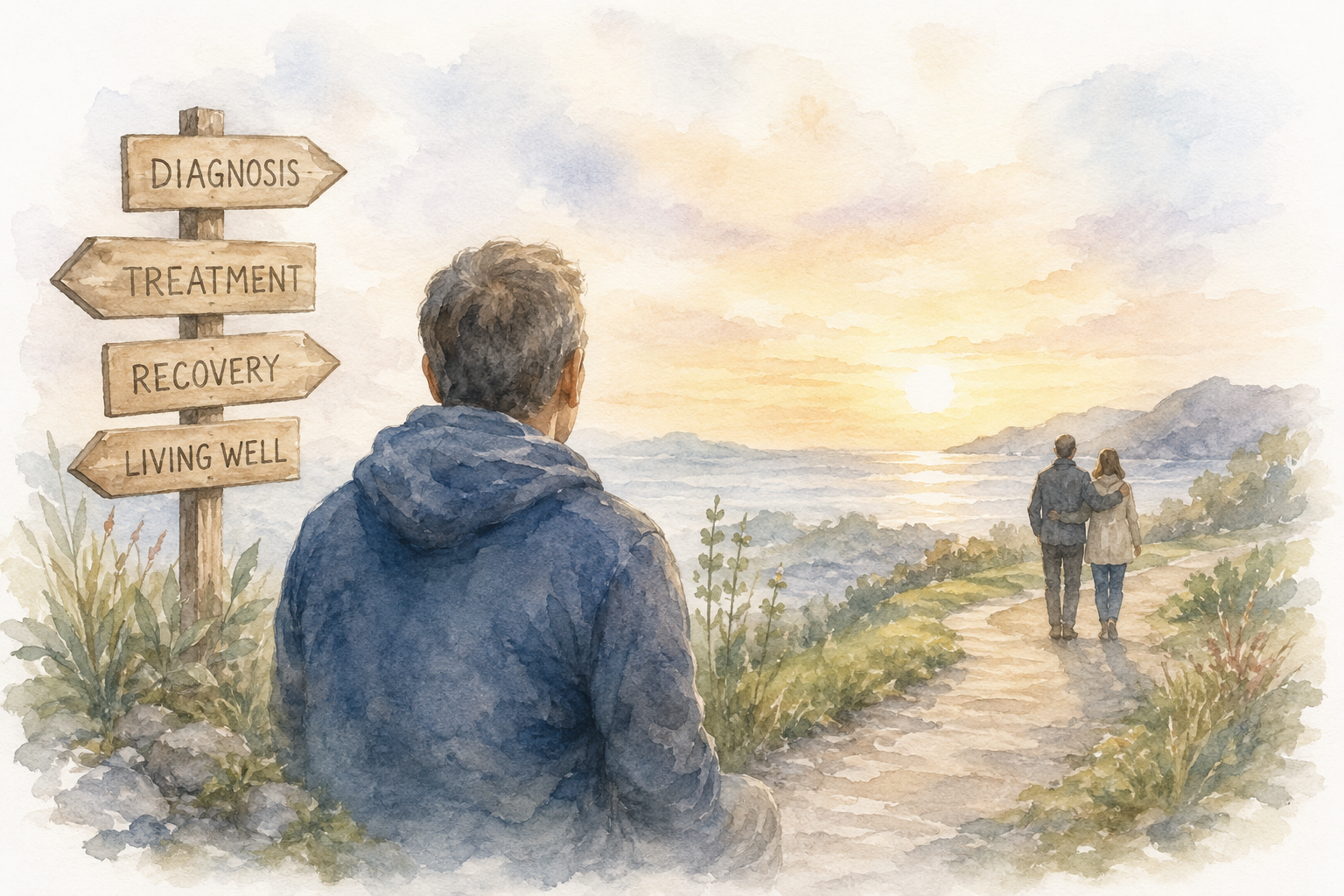
Sometimes, the stories shared by our community remind us just how challenging the journey through head and neck cancer can be — and how much strength, support and connection can make a difference.
In his patient story, one of our community members describes being diagnosed with throat cancer in 2023 after discovering a lump on his neck. Although his cancer was caught early and his prospects for successful treatment were good, the treatment itself proved far more difficult than he had imagined.
Six weeks of radiotherapy and chemotherapy were followed by a serious illness, including sepsis and a prolonged hospital stay. Recovery took many months, and learning to eat and swallow normally again was a significant milestone.
Throughout this journey, the support of his wife and the connections he made with others who had experienced cancer treatment were incredibly important. Those conversations provided understanding and reassurance that only someone who has been through a similar experience can truly offer.
Now back in New Zealand, he wants to turn his difficult experience into something positive by supporting others facing a similar journey.
“If sharing my experience can help someone else feel a little less alone, then something good will have come from what I went through.”
We are very grateful to him for sharing his story with us. Patient stories help us understand the reality of living through head and neck cancer — and remind us why connection and peer support matter.
Read his full story on our Patient Stories page: https://www.headandneck.org.nz/patient-stories/a-journey-through-throat-cancer-and-a-wish-to-help-others
-
1 September 7 PM Adenoid Cystic Carcinoma online meeting. https://www.headandneck.org.nz/peersupportevents/event-one-rg2bh-mx2wm-3ea3j-kaxn2
8 September 7 PM Head and Neck Cancer Support Group online meeting. https://www.headandneck.org.nz/peersupportevents/head-and-neck-cancer-support-group-meeting
Mid-October Northland Support Group. Details to follow.
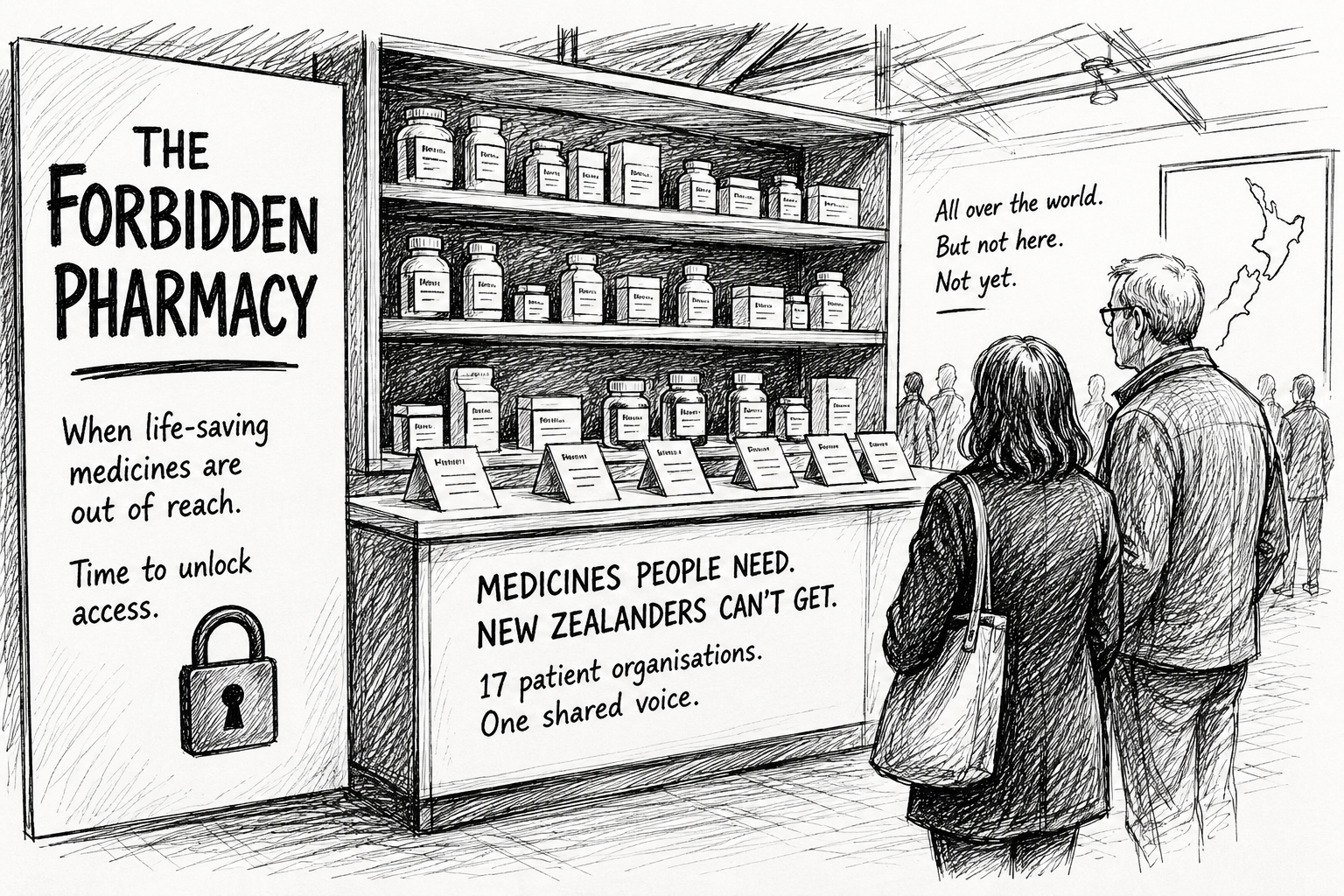
More on the Forbidden Pharmacy: Why access to medicines matters
What if the medicine you needed existed, worked, and was being funded in other countries — but you simply couldn’t access it here in New Zealand?
That is the question at the heart of The Forbidden Pharmacy, a national campaign launched this election year to highlight New Zealand’s poor access to publicly funded medicines.
Seventeen patient organisations have joined forces to draw attention to the issue. Together, they created a striking public installation at Auckland’s Shed 10, displaying more than 200 medicines funded and available in other countries but remain inaccessible to many New Zealanders through our public health system.
The medicines represented in the Forbidden Pharmacy include treatments for cancer, rare diseases, neurological conditions, migraine and other serious illnesses. Each medicine represents much more than a product on a shelf — it represents a person and a whānau waiting for access to treatment that may improve their quality of life, extend their life or give them more precious time with the people they love.
One medicine that directly affects our community is Keytruda, an immunotherapy used to treat advanced oesophageal cancer.
https://www.forbiddenpharmacy.org/medicines/keytruda-a
Why is this happening?
New Zealand’s medicines budget has been described as chronically underfunded compared with other developed countries. Campaign organisers point to New Zealand spending around 0.4% of GDP on publicly funded medicines, compared with an OECD average of 1.4%. They argue that the gap has contributed to New Zealanders having access to fewer modern medicines than people in comparable countries.
Importantly, the campaign is not calling for politicians to choose individual medicines or to override Pharmac’s independence. Instead, it calls for greater investment so that assessed medicines, identified as priorities, can be funded in a more timely way.
For people living with cancer, this is a particularly important conversation. Cancer treatment does not end with surgery, chemotherapy or radiotherapy. Access to appropriate medicines can be an important part of treatment at different stages of the cancer journey.
The Forbidden Pharmacy campaign is asking New Zealanders to make medicines access an election issue and to ask political parties what they will do to improve timely access to medicines.
The physical pharmacy may have closed, but the campaign continues online.
You can learn more, hear the stories of people affected and add your voice to the campaign at:
The Forbidden Pharmacy : https://www.forbiddenpharmacy.org
For our community, this is about more than medicines. It is about equity, choice, hope and ensuring that where effective treatments exist, New Zealanders have a fair opportunity to access them.
-
CanConnect - West Cancer Group meets on the second Thursday of each month 9.30 am to 11.30 pm at the Opanuku Studio, Corban Estate Arts Centre, 2 Mt Lebanon Lane, Henderson.
The meeting is for all those affected by cancer, patients and their supporters.
An engaging and supportive group who meet to learn and connect. Each month has a different wellbeing topic (with guest speakers). Following that, we connect over gentle movement and a cup of tea. If movement is hard for you, we have other great (non-walking) alternatives too. -
Dove House: Holistic Support for People Affected by Cancer
Dove Hospice & Wellness offers a wide range of supportive services for people living with cancer and other life-threatening illnesses, as well as for carers, families, and whānau. Based in Auckland, Dove House focuses on supporting emotional, physical, and spiritual wellbeing alongside medical treatment.
Services include nursing and medical support, counselling for individuals, couples, and families, physiotherapy, and a variety of holistic therapies such as oncology massage, Reiki, relaxation therapy, acupuncture, meditation, chair yoga, and lymphoedema management. These services are designed to help people manage the side effects of treatment, reduce stress, and improve quality of life.
Dove House also provides support groups for patients, carers, and people who are bereaved, creating opportunities for connection and shared understanding with others facing similar experiences. Workshops and education sessions are offered to help people build practical coping strategies and wellbeing skills during and after treatment.
For those unable to travel, Dove offers a mobile therapy service that brings supportive therapies into people’s homes. Dove Wing, the organisation’s inpatient unit, also provides respite and palliative care for people needing more intensive support.
Importantly, Dove Hospice & Wellness emphasises that hospice support is not only for end-of-life care. Their services are available to support people at many different stages of illness, including those undergoing treatment, recovering, or living with long-term conditions. The organisation’s approach is centred on helping people and their whānau feel supported, connected, and cared for throughout their journey. dovehospice.org.nz
A Message from the Chair
A heartfelt thank you to everyone who supported our recent fundraiser.
Thanks to your generosity, we have been able to provide 14 additional Patient Support Packs to people who are newly diagnosed or beginning their journey with head and neck cancer.
For someone receiving a diagnosis, those first days and weeks can feel overwhelming. A Support Pack provides practical information, helpful resources and a reminder that they are not alone — there is a community here to support them.
Every donation, no matter the size, helped make this possible. We are especially grateful to those who shared our fundraiser with friends, family and their wider networks. When our community comes together, the impact is much greater than any one donation.
On behalf of the Trustees and everyone in the Head and Neck Cancer Support Network community, thank you for helping us reach people at a time when they need support most.
Your generosity means that 14 more people will receive a little practical help, encouragement and connection at the beginning of what can be a very difficult journey. If you haven’t shared our Donations page with family and friends, you can do so by copying this link: https://www.headandneck.org.nz/donations
With heartfelt thanks,
Ngā mihi,
Diana Ayling
Chair
Head and Neck Cancer Support Network Trust
Another way to join a Support Group

Want to do something different than Facebook?
We know Facebook isn’t for everyone — and sometimes you just want something simpler, more private, and easier to keep up with.
That’s why we’ve created a WhatsApp group for our community 💚
It’s a space for real-time connection, quick check-ins, and support when you need it most — without the noise of social media. Whether you prefer reading quietly or joining the conversation, you’re very welcome.
If you’ve been looking for a more personal way to stay connected, this might be the right fit for you.
-
https://www.headandneck.org.nz/donations
Thank you for your continued support.
-
If you are new to head and neck cancer, or back in treatment, we have a support pack for you. You can find all the details here. https://www.headandneck.org.nz/patient-planner
If you would like some brochures to introduce the Head and Neck Cancer Support Network Trust to your family and friends, please feel free to contact us headandnecknetwork@gmail.comThe New Zealand Cancer Society has a booklet Understanding Head and Neck Cancer you can access it here. Understanding Head and Neck Cancer
We have a toolkit designed specifically for those who stand beside us through the head and neck cancer journey. You can access it here https://www.headandneck.org.nz/light-keepers
-
Check out our latest articles. Curated articles related to the treatment, care and support of those affected by Head and Neck Cancer. https://www.headandneck.org.nz/advancements
-
We welcome contact from our head and neck cancer community, including whānau and friends. Please feel welcome at any of these contact points. https://www.headandneck.org.nz/contact-us